Creativity is the heart of the game, capable of bringing brilliant and innovative ideas to life on the chessboard. It manifests in the ability to find unconventional solutions, adapt to unique situations, and develop new strategies, making every move an expression of ingenuity and originality.
Playing styles can be divided into many categories, the two main ones being combinative and positional. These represent the two major approaches in the game, each with unique characteristics that can be interpreted in various nuances.
A style based on the ability to build sequences of forced moves that exploit specific aspects of the position to achieve strategic or tactical goals.
Examples:
Morphy, Tal, Fischer, Kasparov, Morozevich, Jobava, Dubov, Rapport.
A solid and strategic style, based on the strength of structures and control. Positional players prefer to avoid tactical risks, aiming to gradually improve their pieces.
Examples:
Capablanca, Botvinnik, Petrosian, Fischer, Karpov, Kramnik, Gelfand.
Playing styles are not rigid and can be further distinguished based on the player’s way of thinking. Some grandmasters adopt an intuitive approach, based on brilliant and immediate insights, while others prefer a more analytical method, elaborating deep plans and analyzing with precision.
An approach based on combinative vision and instant decisions, derived from deep knowledge of the position’s spirit.
Examples:
Capablanca, Alekhine, Tal, Karpov, Carlsen.
An approach based on deep plans and accurate calculations, reflected both in the opening and in other phases of the game, elaborating long-term strategies.
Examples:
Steinitz, Botvinnik, Petrosian, Kasparov, Ding.
The game was characterized by spectacular sacrifices and surprising moves. Winning was secondary to winning with style.
Morphy, Anderssen
Strategic and solid approach based on classical principles.
Steinitz, Lasker
The hypermodern school emphasizes dynamic control of the center.
Réti, Nimzowitsch, Alekhine
Creativity channeled through meticulous preparation and theoretical rigor.
Botvinnik, Bronstein, Smyslov
Known as the “Magician from Riga,” Tal is considered the greatest attacker in chess history, characterized by a imaginative and unpredictable style.
Petrosian’s creativity lies in his unique ability to use positional sacrifices to gain long-term strategic advantages.
Universal approach and innovation in theoretical preparation, growing global attention thanks to the 1972 Match of the Century.
Fischer, Spassky
Extraordinary positional approach, nicknamed “boa constrictor” for his ability to strangle opponents without risks.
Creativity combined with relentless aggression, always oriented towards initiative.
Revolutionary approach with advanced calculations.
Rybka, Deep Fritz, Komodo, Stockfish
His strength lies in incredible intuition and versatility. He stands out for a universal style that combines positional and tactical aspects and possesses the ability to convert even minimal advantages into victories.
A new chess engine is developed, AlphaZero, based on a completely new approach.
Leela, Komodo, Stockfish
Training creativity requires practices that stimulate the mind to think originally, recognize and exploit known patterns, and find solutions to face new challenges.
Perfects thinking qualities, photographic memory, and concentration ability.
Helps recognize recurring themes and understand how to exploit them effectively to gain advantages during the game.
Allows identifying mistakes and developing a critical approach to improve one’s game.
Deepens every aspect of the game, stimulates curiosity and expands strategic and cultural understanding of chess.
Thinking Ability
Tools to sharpen the chess mind
Blindfold Analysis
Visualize and calculate variations without seeing the board
Post-mortem Analysis
Critically reflect on your own games
Reading and Research
In-depth study of games annotated by masters
Strategic Knowledge
Fundamentals to understand the position
Pattern Recognition
Recognize recurring tactical and strategic patterns
Pawn Structures
Understand formations and typical plans
Piece Activity
Evaluate mobility and coordination of pieces
Relative Value of Pieces
Adapt evaluation to the positional context
King Safety
Balance defense and counterattack effectively
Exploring the essence of creativity means immersing ourselves in positions that test our thinking ability. Through a selection of diagrams, we will discover how creativity emerges in different nuances.
The goal is to recognize the main themes and find solutions that can inspire our game.
Each position represents an opportunity to see how great masters have faced complex and uncertain situations with ingenuity and precision.
Flitney,A - Mitchell,R - 2008
Position after 9...e6
Manik,M - Balinov,I - 1997
Position after 14...b5
Negyesy,G - Gereben,E - 1951
Position after 13...Be6
Grabliauskas,V - Hector,J - 1998
Position after 12.Qc2
Onischuk,A - Shirov,A - 2007
Position after 20.h3
Werle,J - Tischbierek,R - 2008
Position after 10...Qh5
Bogoliubov,E - Mises,J - 2008
Position after 21...Qh5
Leningrad System
Position after 9...Ne4
Kramnik,V - Ivanchuk,V - 2024
Position after 18...Nxb6
Andersson,U - Zwirs,N - 2013
Position after 16...Bg6
Ivkov,B - Larsen,B - 1964
Position after 20.b3
Spragget,K - Appel,R - 2012
Position after 16...Nd6
Understanding the evolution of creativity in chess helps us appreciate the contributions of great masters of the past and apply their teachings to our game.
Training requires method: analysis, pattern study, game reflection, and understanding of positional structures.

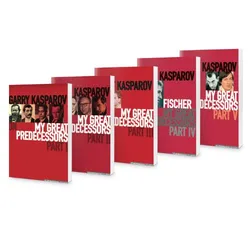
Author: Garry Kasparov
Publisher: Everyman Chess
A collection of books written by former World Champion Garry Kasparov. The five volumes in the series cover the players who preceded Kasparov in becoming World Champions.

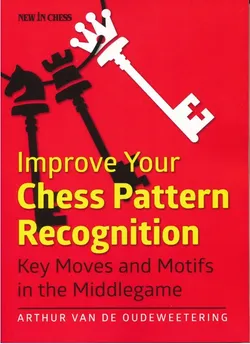
Author: Arthur Van de Oudeweetering
Publisher: New In Chess
Helps recognize similarities with previously seen positions to quickly understand the essence of the position and identify the best moves, conveying the most important thematic patterns of the middlegame.

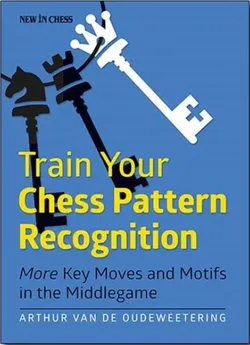
Author: Arthur Van de Oudeweetering
Publisher: New In Chess
A sequel to the previous classic, offering new tools to recognize patterns and quickly improve understanding of positions through practical chapters and themes to recognize in the middlegame.