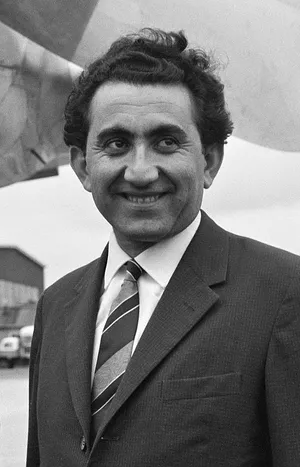
Iron Tigran
Ninth World Champion (1963 - 1969), Petrosian was greatly influenced from an early age by the games of Capablanca and Nimzowitsch, developing a cautious and maneuvering style.
“I used to sleep with My System under my pillow.”
He was famous for his impenetrable style and extraordinary defensive ability. His rock-solid play frustrated the boldest attacks, transforming defense into a refined art.
He represented an independent school of thought, capable of embracing old theoretical teachings while exploring new paths.
Diagrams (1/3)
Reshevsky,S - Petrosian,T - 1953
 Masterpiece
 Position after 25.Rfe1
Troianescu,O - Petrosian,T - 1953
 Masterpiece
 Position after 25.Ne3
Petrosian,T - Gligoric,S - 1962

Position after 26...Raf6
Diagrams (2/3)
Duckstein,A - Petrosian,T - 1962

Position after 26.g3
Parma,B - Petrosian,T - 1971

Position after 26.Nxe4
Petrosian,T - Rashkovsky,N - 1976
 Masterpiece
 Position after 15...Ba6
Diagrams (3/3)
Padevsky,N - Petrosian,T - 1964

Position after 34.Nxd7
Petrosian,T - Spassky,B - 1966
 Masterpiece
 Position after 12...Bh3
Petrosian,T - Fischer,R - 1971

Position after 24...e2
Further Reading (1/2)
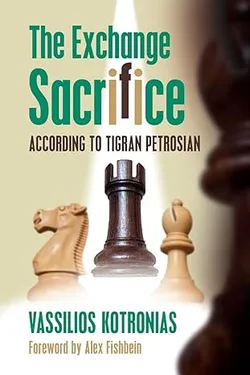
The Exchange Sacrifice
Author: Vassilios Kotronias
Publisher: Russell Enterprises
A collection of 36 games, all deeply annotated, analyzing the unique approach of the Armenian champion.
Each game is accompanied by an introduction that contextualizes it from a historical perspective, offering a unique vision of Petrosian’s art.
Further Reading (2/2)
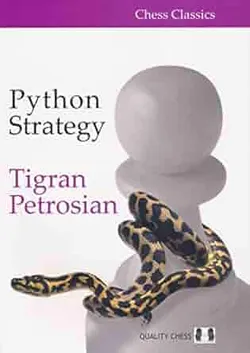
Python Strategy
Author: Tigran Petrosian
Publisher: Quality Chess
The book offers a collection of annotated games showing how Petrosian suffocated his opponents with slow, constant pressure, just like a python.
“Petrosian is not a tiger that pounces on its prey, but rather a python that smothers its victim.”