Modifying Structure to Create Imbalances
Short,N - Timman,J - 1991
 Masterpiece
 Position after 16...Qb4
Tomashavksy,E - Ganguly,S - 2007

Position after 15...Qxe5
Strategic Maps: Isolated Pawn
It’s a fundamental pawn structure that appears in many openings: Queen’s Gambit, Slav Defense, Tarrasch Defense, Sicilian Alapin, French Defense Tarrasch Variation. In general, in this case, White has better prospects in the middlegame, thanks to their activity and central control, while Black aims for a more favorable endgame, where the isolated pawn can become a weakness.
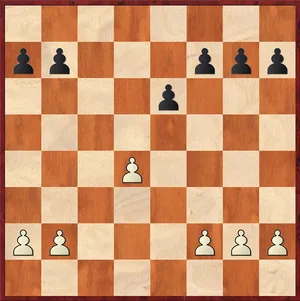
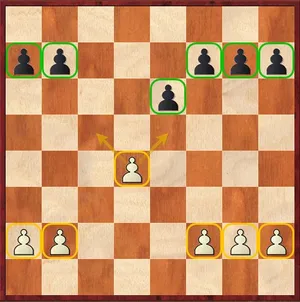
Strategic Maps: Isolated Pawn
Zvjaginsev,V - Vasquez,R - 2013

Position after 12...b5
Typical White Plan
White can decide to break in the center with the d5 push, to open lines and gain the initiative, or sacrifice a pawn with the same goal. Another plan is to transfer the rook to the third rank to increase pressure on the castled position.
Typical Black Plan
Black must try to fix the isolated pawn and increase pressure on the open file, without maintaining too passive a stance. One idea can be …a6, …b5 and …Bb7 to over-control the d5 square. Another is …Re8, …Bf8, …g6, Bg7 and target the d4 pawn.
Strategic Maps: Hanging Pawns
Positions with hanging pawns often derive from a position with an isolated pawn. This structure offers White, in this case, an advantage in the middlegame thanks to space advantage and control of central squares. However, if Black manages to simplify the position or block the pawns, they can become a weakness, making the endgame favorable for Black.
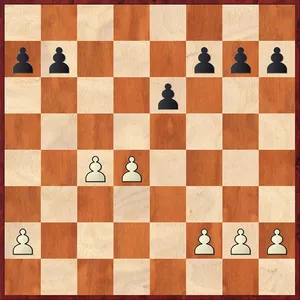
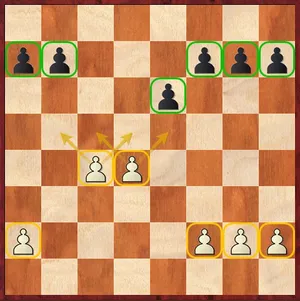
Strategic Maps: Hanging Pawns
Kasparov,G - Portish,L - 1983

Position after 16...Na5
Typical White Plan
White aims to attack on the kingside, with moves like Ne5, Bc2, Qd3, while a rook can be transferred along the third rank, for example with Re1-e3-h3. Another plan is the d4-d5 push, useful both to open attacking lines and to obtain a dangerous passed pawn on the d-file.
Typical Black Plan
Black must try to neutralize the attack by simplifying or putting pressure on the central pawns, trying to block them. A key idea is to split the hanging pawns structure, exploiting pushes like b6-b5 or e6-e5 to weaken White’s control of the center.
Strategic Maps: Carlsbad Structure
The Carlsbad structure is one of the most well-known and studied pawn configurations. It’s particularly noted in the Exchange Variation of the Queen’s Gambit but can also emerge from other Queen’s openings, like the Nimzo and Grunfeld. Moreover, it can arise through different move orders and, in some cases, even with reversed colors, as in the Exchange Variation of the Caro-Kann or the Scandinavian.
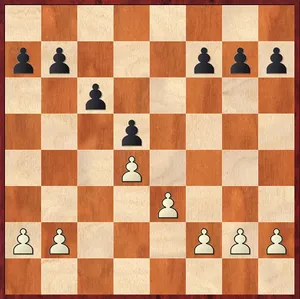
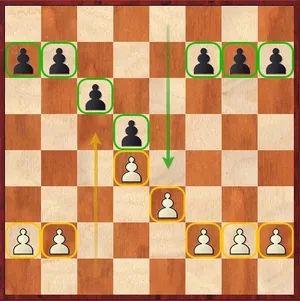
Strategic Maps: Carlsbad Structure
San Segundo Carrillo,P - Pigusov,E - 1994

Position after 15...b5
Typical White Plan
In this position, White can opt for the minority attack (as was done), advancing with b2-b4-b5 to weaken the queenside. Alternatively, prepare the e3-e4 push to gain space in the center. In general, the character of the position can change notably depending on whether Black’s pawns are arranged in a7-b6-c7 or a6-b7-c6.
Typical Black Plan
A Black plan is to play b7-b6 followed by c6-c5, transitioning to a structure with hanging pawns. In some cases, instead, Black plays c6-c5 directly, and after dxc5, will obtain an isolated pawn. A less frequent idea is the b7-b5 push, once White has pushed b2-b4, to create a solid outpost for a knight on c4.
Further Reading (1/3)
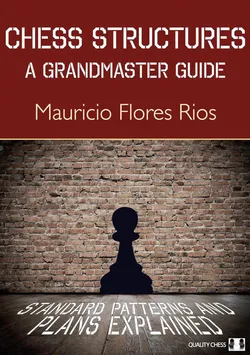
Chess Structures
A Grandmaster Guide
Author: Mauricio Flores
Publisher: Quality Chess
This book offers a practical study of the most common pawn structures that occur in games. The author divides the content into families, providing a clear and direct guide without getting lost in complications or overly deep analysis. Through illustrative games and positional exercises, he illustrates the main plans, mistakes to avoid, and strategic ideas to best exploit the characteristics of each structure.
Further Reading (2/3)
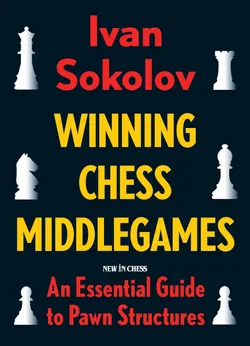
Winning Chess Middlegames
An Essential Guide to Pawn Structures
Author: Ivan Sokolov
Publisher: New In Chess
Originally published in 2009 and revised and updated in November 2025, this first volume by Sokolov analyzes pawn structures deriving from queen’s openings, such as Nimzo-Indian and Queen’s Gambit. Starting from deepening strategic ideas and plans related to these configurations, the author connects pawn structures to the opening variations from which they can emerge, providing a practical guide to face them.
Further Reading (3/3)
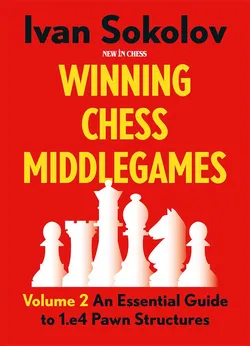
Winning Chess Middlegames
An Essential Guide to 1.e4 Pawn Structures
Author: Ivan Sokolov
Publisher: New In Chess
The second volume is dedicated to pawn structures generated by openings like the Sicilian, French, and positions deriving from 1.e4 and 1…e5. With detailed analysis and illustrative games, Sokolov explains how to face these dynamic positions, exploiting the potentials of pawn structures to obtain strategic advantages.